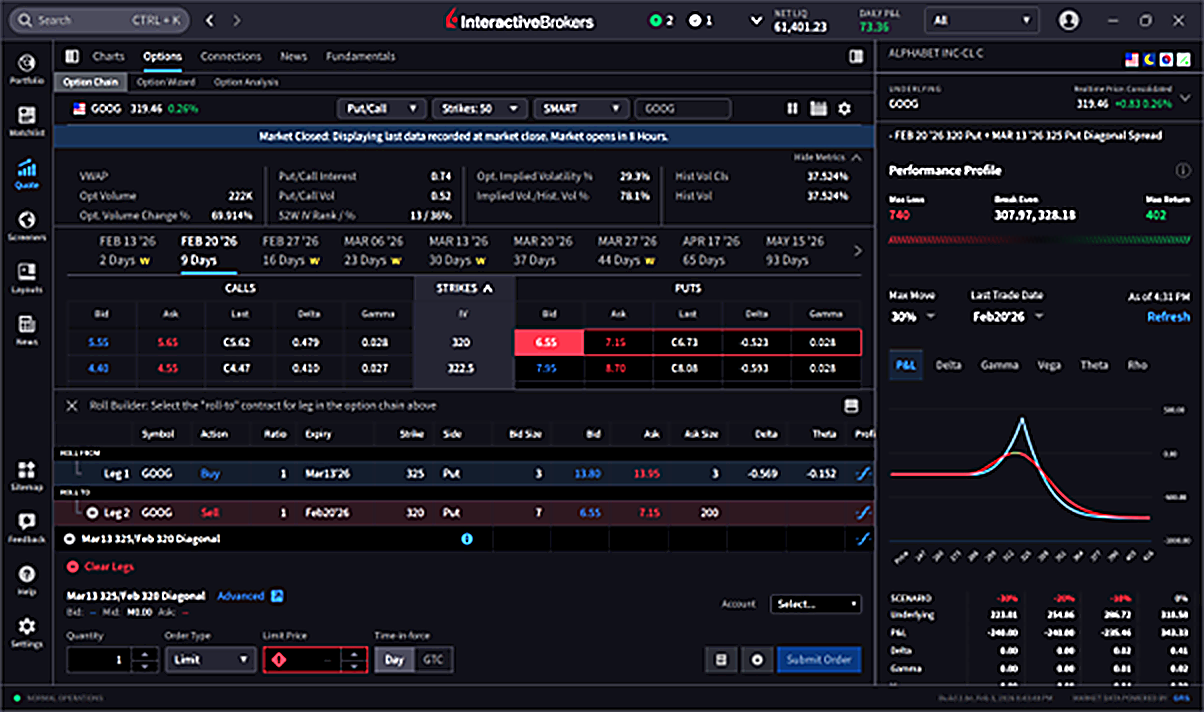
Following a comprehensive evaluation of potential candidates, our team identifies the most suitable stock or ETF based on key criteria including premium yield, risk parameters, liquidity, and prevailing market conditions. The trade structure outlined below is strategically designed to maximize income generation while adhering to disciplined risk management and capital preservation principles. This approach reflects our commitment to delivering a balanced risk-to-reward profile, making it an attractive solution for income-focused investors seeking stability, consistency, and reliable option-based returns.
Best Income Setup: NVDA Option Trade (Example)
Put Diagonal Trade — NVDA
Assumptions (for illustration only):
- NVDA stock price: $520
- Volatility: Elevated but stable
- Objective: Weekly income with downside insurance
1. Long Leg (Insurance / Core Position)
- Buy 1 × NVDA December 2027 $450 Put
- Time to expiry: ~12 months
- Purpose:
- Provides long-dated downside protection
- Anchors the diagonal and limits tail risk
- Retains high vega and slow theta decay
2. Short Leg (Income Generator)
- Sell 1 × NVDA Weekly $500 Put
- Time to expiry: 5–7 days
- Purpose:
- Generates immediate premium income
- Positioned above the long strike to maintain diagonal structure
- Rolled weekly for continuous cash flow
Why This Structure Works
- Theta Advantage:
The short weekly put decays rapidly, while the long LEAPS put decays slowly. - Volatility Control:
Long leg benefits from volatility expansion during market stress, offsetting short-put risk. - Capital Efficiency:
Lower capital requirement than naked short puts, with defined downside protection. - Flexibility:
Weekly adjustments allow the trader to respond to NVDA price movement.
Management Scenarios
If NVDA stays above $500
- Short put expires worthless
- Keep full premium
- Sell a new weekly put the following week
If NVDA drops toward $500
- Roll short put down and/or out in time
- Maintain distance between short and long strikes
If NVDA drops below $450
- Long LEAPS put increases in value
- Can:
- Close entire structure
- Roll long put down
- Convert strategy into a longer-dated spread
Risk Profile (Simplified)
| Factor | Outcome |
|---|---|
| Max Risk | Defined by long put |
| Income | Weekly premium |
| Best Market | Sideways to mildly bearish |
| Worst Case | Sharp crash below long strike (hedged, not naked) |
Strategic Summary
This NVDA Put Diagonal uses time decay as the primary edge, combines income generation with insurance, and is well-suited to high-liquidity stocks with strong options markets like NVDA. It aligns particularly well with systematic weekly income approaches and disciplined risk management frameworks.

